
James
Changing Realities at IPPR Scotland's Ten Year Anniversary Event
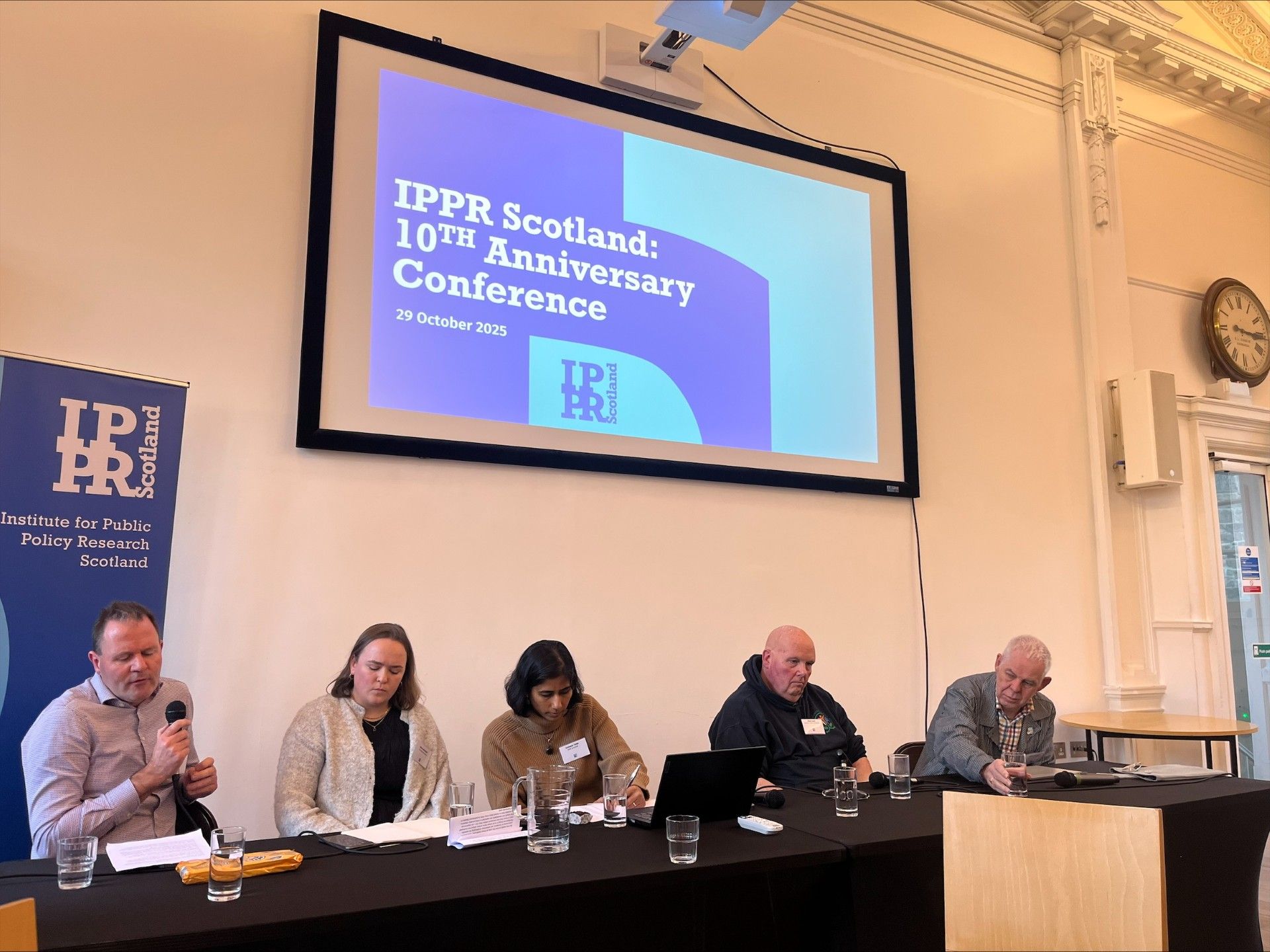
17 Nov, 2025Spoken on 29th October 2025
Changing Realities is a project bringing together almost 200 parents and carers across the UK. The project documents what life is like for parents on a low income and, using lived experience, campaigns for the change we need to see.
You’ve brought us all together here to talk about an issue that unites us. Changing Realities participants come from across all four nations and from many different walks of life to share our experiences, values and vision for change together. That’s incredibly powerful. We are the Chat GPT of the lived experience world!
It’s important for regular people like me get their voice heard. I’m speaking today to encourage others to share their experience and to push those with power to change what happens to the system.
You might not expect it from looking at me, but I’ve had the worst 10 years of my life recently. Being part of the Changing Realities project has been really good for me. I look forward to meetings and have built a sense of community with fellow participants. As we come together today, I think it’s a reminder to not make assumptions about other people and to find what connects us and unites us in our campaign for change.
Let's put this into context. In September, Changing Realities were invited to meet the First Minister in Bute House to discuss tackling child poverty. On the day we met the First Minster he flew off straight after the meeting to meet the American president to talk about whisky tariffs. That's how highly he regards these issues and meeting us. One of the topics discussed was children's trips in school; this has now been passed to the next stage: bringing as a Bill to parliament.
We are planning meet again with Cabinet Secretary Shirley-Anne Sommerville and more of the social security team to discuss the issue of Social Security further. At the meeting with the First Minister, we discussed our priorities for change including:
• the importance of increasing the Scottish Child Payment
• Safe and affordable housing
• Childcare that can fit around work
• The value of free school meals
• Making sure parents and children have enough support (especially disabled children)
The difference between England and Scotland is that you can meet the FM and cabinet in Scotland whereby in England you get fobbed off by a junior minister. There is a sense that, in Scotland, tackling child poverty is a priority at the highest levels of Government. It is vital to include lived experience in the debate around tackling child poverty. If you don’t ask people how they are doing and how they are getting on, it is pointless recommending a new scheme or incentive. Making progress also includes making real investment. For example, the Scottish Government previously released a five-year plan to end the need for food banks. The five years are up, now what?
We need to listen to what people really need and increase incomes for families. That can be done in Scotland with important measures like the Scottish Child Payment – but will we ever see the end of poverty without change at UK level in the benefits system?
What difference would it make to your life - or others - if Universal Credit covered the cost of the essentials? If Universal Credit covered the cost of essentials, it would lift the worry at the end of every month. When I was at my lowest point, I was feeding my children and going without myself. I was eating a packet of custard creams a day because they were 27p, which was all I could afford once the other essentials were covered. That was my breakfast, lunch and dinner for months. With inflation, that 27p has gone up to about £1 in today’s prices – and that cost of inflation is something we’re not seeing reflected in the amount people get from social security, or in wages.
If I could have afforded to put the heating on during the winter – either because I was getting enough income from social security or because it was being subsidised – and if I could have afforded to eat better, the pneumonia I got might not have kept me off work for months. It’s not about a one-size-fits-all approach either. At a minimum, we need Universal Credit to cover the cost of the essentials so that people can stay healthy and well. But there are other initiatives the government should invest in alongside this, such as an NHS prescribing exercise, or heating being subsidised (this could support people over the shorter term as they navigate a tough period).
That lifeline needs to be there though – Universal Credit should support people properly when they need it most. If we are going to make a difference to people’s lives who are living in poverty, we need to get MSPs and MPs to understand the realities that their constituents are facing. It’s not good enough for a politician to show up at a food bank for a photo shoot. That’s not really listening to what people need. I want MSPs to do more. Go out and meet people in your community. Talk to people and ask them what they actually need.